
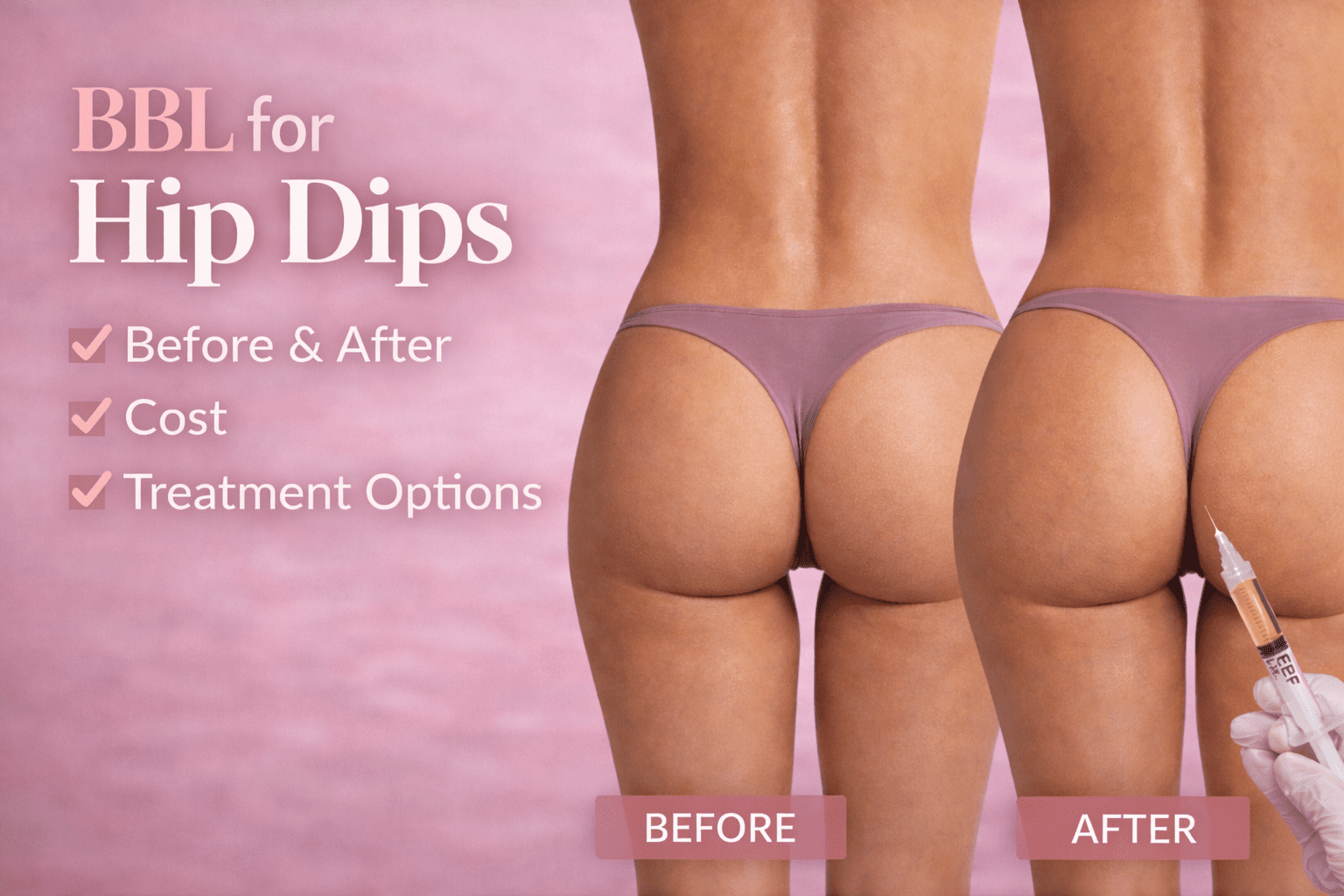
Hip dips have become one of the most discussed body contouring topics in recent years. Many people notice an inward curve between the hips and thighs and wonder whether it can be corrected. One of the most searched treatments for this concern is a BBL for hip dips, which aims to create a smoother, more contoured silhouette.
At Aesthetic Island, a leading Brooklyn Med Spa, patients often ask whether hip dips can be improved and what treatment options are available. While surgical Brazilian Butt Lift procedures are commonly discussed online, there are also non-surgical approaches that may help improve body contour in this area.
In this comprehensive guide, we explain what hip dips are, why they occur, how BBL procedures address them, and what patients can expect regarding results, recovery, and cost.
Table of Contents
ToggleWhat Are Hip Dips?
Hip dips refer to the inward indentation between the hip bone and the upper thigh. This natural contour occurs where the pelvis meets the femur. Some people have a more noticeable indentation due to the structure of their bones and fat distribution.
Hip dips are completely normal and occur in people of all body types. However, many individuals seek treatments to create a smoother curve between the waist and thighs.
Hip dips are sometimes referred to as:
• Violin hips
• Hip indentations
• Lateral depressions
The appearance of hip dips can vary depending on body composition, muscle structure, and genetics.
Why Do Hip Dips Occur?
Hip dips are primarily determined by anatomy. The shape of the pelvis and the position of the hip bones influence whether hip dips are visible.
Several factors can contribute to their appearance:
Bone Structure
The width and shape of the pelvis play a significant role in the appearance of hip dips.
Fat Distribution
The body stores fat differently in each individual. Some people naturally carry less fat in the hip dip area.
Muscle Development
Muscle mass around the gluteal muscles can affect the appearance of hip dips.
Genetics
Genetics strongly influence body shape and fat distribution patterns.
It is important to remember that hip dips are not a flaw—they are simply a natural anatomical feature.
What Is a BBL for Hip Dips?
A Brazilian Butt Lift (BBL) is a surgical procedure designed to enhance the shape and volume of the buttocks. The procedure typically involves removing fat from one area of the body and transferring it to the buttocks and surrounding areas.
For patients concerned about hip dips, surgeons may strategically inject fat into the hip area to create a smoother contour.
The general steps of a BBL procedure include:
Liposuction to remove fat from areas such as the abdomen or thighs
Purification of the harvested fat
Fat transfer into the buttocks and hip dip areas
The goal is to create a more rounded, balanced shape.
Before and After Results of BBL for Hip Dips
Patients considering a BBL often want to know what results they can expect.
Before Treatment
Before a BBL procedure, patients may notice:
• Visible indentations between the hips and thighs
• A less curved hip silhouette
• Limited volume in the outer hip area
After Treatment
Following a successful BBL procedure, patients may see:
• Fuller hips
• A smoother curve between waist and thighs
• Enhanced body proportions
• Increased buttock volume
However, results vary depending on individual anatomy and the amount of fat available for transfer.
Who Is a Good Candidate for a BBL?
A BBL procedure is typically recommended for individuals who:
• Have noticeable hip dips
• Want increased buttock volume
• Have sufficient fat available for transfer
• Are in good overall health
Candidates should also have realistic expectations about the results.
Patients with very low body fat may not have enough fat available for transfer, which may limit the procedure’s effectiveness.
Recovery After a BBL Procedure
Recovery after a surgical BBL can take several weeks.
Patients are usually advised to avoid sitting directly on the buttocks for a period of time to allow transferred fat cells to establish blood supply.
Common recovery steps include:
• Wearing compression garments
• Limiting pressure on the treated area
• Avoiding strenuous exercise for several weeks
Swelling and bruising are common during the recovery period.
Full results typically become visible after several months once swelling has subsided.
Risks Associated With Surgical BBL
While BBL procedures can produce dramatic results, they also carry certain risks.
Potential complications may include:
• Infection
• Fat embolism
• Irregular fat absorption
• Prolonged swelling
For this reason, many patients are now exploring non-surgical alternatives that offer body contouring improvements with fewer risks and less downtime.
Non-Surgical Alternatives for Hip Dips
At Aesthetic Island, patients often ask about non-surgical options to improve hip dips.
Non-surgical treatments focus on improving body contour without surgery.
Possible approaches may include:
• Body contouring treatments
• Skin tightening procedures
• Muscle-building technologies
• Injectable treatments designed to enhance shape
While these options may not produce the same dramatic results as surgery, they can help improve body contour and symmetry with minimal downtime.
Benefits of Non-Surgical Body Contouring
Many patients prefer non-surgical body contouring treatments for several reasons.
Benefits can include:
• Minimal downtime
• Lower risk compared to surgery
• Gradual natural-looking results
• No anesthesia required
These treatments may help improve the overall appearance of the hip area while supporting natural body contours.
Cost of BBL for Hip Dips
One of the most common questions patients ask is how much a BBL for hip dips costs.
The cost of a surgical BBL varies depending on factors such as:
• Surgeon experience
• Geographic location
• Amount of liposuction required
• Facility and anesthesia fees
In major cities like New York, BBL procedures often range between:
$8,000 – $15,000 or more
This cost typically includes the surgical procedure, operating facility, and follow-up care.
Non-surgical treatments may be significantly less expensive depending on the technology used.
Factors That Influence Treatment Cost
Several factors influence the cost of body contouring procedures.
Provider Expertise
Experienced specialists may charge higher fees due to their skill and reputation.
Treatment Area
Larger treatment areas require more time and resources.
Number of Sessions
Some non-surgical treatments require multiple sessions to achieve desired results.
Technology Used
Advanced body contouring technologies may affect pricing.
During a consultation, providers can give patients a more accurate cost estimate.
How Long Do Results Last?
The longevity of results depends on the treatment method.
Surgical BBL Results
Fat cells transferred during a BBL can last for many years if they survive the initial healing process. Maintaining a stable weight helps preserve results.
Non-Surgical Treatment Results
Non-surgical body contouring results often develop gradually and may require maintenance sessions.
Lifestyle factors such as exercise and nutrition also play a role in maintaining results.
Exercise and Hip Dips
Many people wonder if exercise can eliminate hip dips.
While exercise cannot change bone structure, strengthening certain muscles can help improve the appearance of hip dips.
Exercises that target the glutes and hips include:
• Hip thrusts
• Side leg raises
• Squats
• Glute bridges
Building muscle in the gluteal region can enhance body contour and reduce the appearance of indentations.
Body Positivity and Hip Dips
It’s important to remember that hip dips are a completely natural part of human anatomy. Many people—including athletes and models—have visible hip dips.
Body contouring treatments are a personal choice and should focus on enhancing confidence rather than trying to conform to unrealistic beauty standards.
Modern aesthetic treatments emphasize natural-looking results that complement each person’s unique body shape.
What to Expect During a Consultation
Before undergoing any body contouring treatment, patients typically meet with a provider to discuss their goals.
During the consultation, providers evaluate:
• Body structure
• Fat distribution
• Skin elasticity
• Overall health
Based on this assessment, a personalized treatment plan is created.
Patients are encouraged to ask questions about treatment options, expected results, and recovery.
Choosing the Right Provider
Selecting an experienced provider is one of the most important steps when considering body contouring procedures.
A qualified provider should:
• Have specialized training in aesthetic treatments
• Provide realistic expectations about results
• Prioritize patient safety
Researching credentials and reviewing before-and-after photos can help patients make informed decisions.
Maintaining Your Results
After body contouring treatment, maintaining results often involves healthy lifestyle habits.
Key factors include:
• Balanced nutrition
• Regular exercise
• Stable body weight
• Proper hydration
These habits support long-term body shape and overall wellness.
Final Thoughts
Hip dips are a natural anatomical feature, but many individuals seek treatments to create a smoother hip contour. A BBL for hip dips is one of the most well-known options, using fat transfer to enhance the shape of the hips and buttocks.
While surgical BBL procedures can provide significant changes, they also involve higher costs, longer recovery, and greater risks. Non-surgical body contouring treatments may offer alternative solutions for patients seeking more subtle improvements with minimal downtime.
At Aesthetic Island, a trusted Brooklyn Med Spa, patients can explore a range of body contouring options designed to enhance natural body proportions safely and effectively.
If you are considering treatment for hip dips, schedule your Appointment today and take the first step toward a more confident you.

