
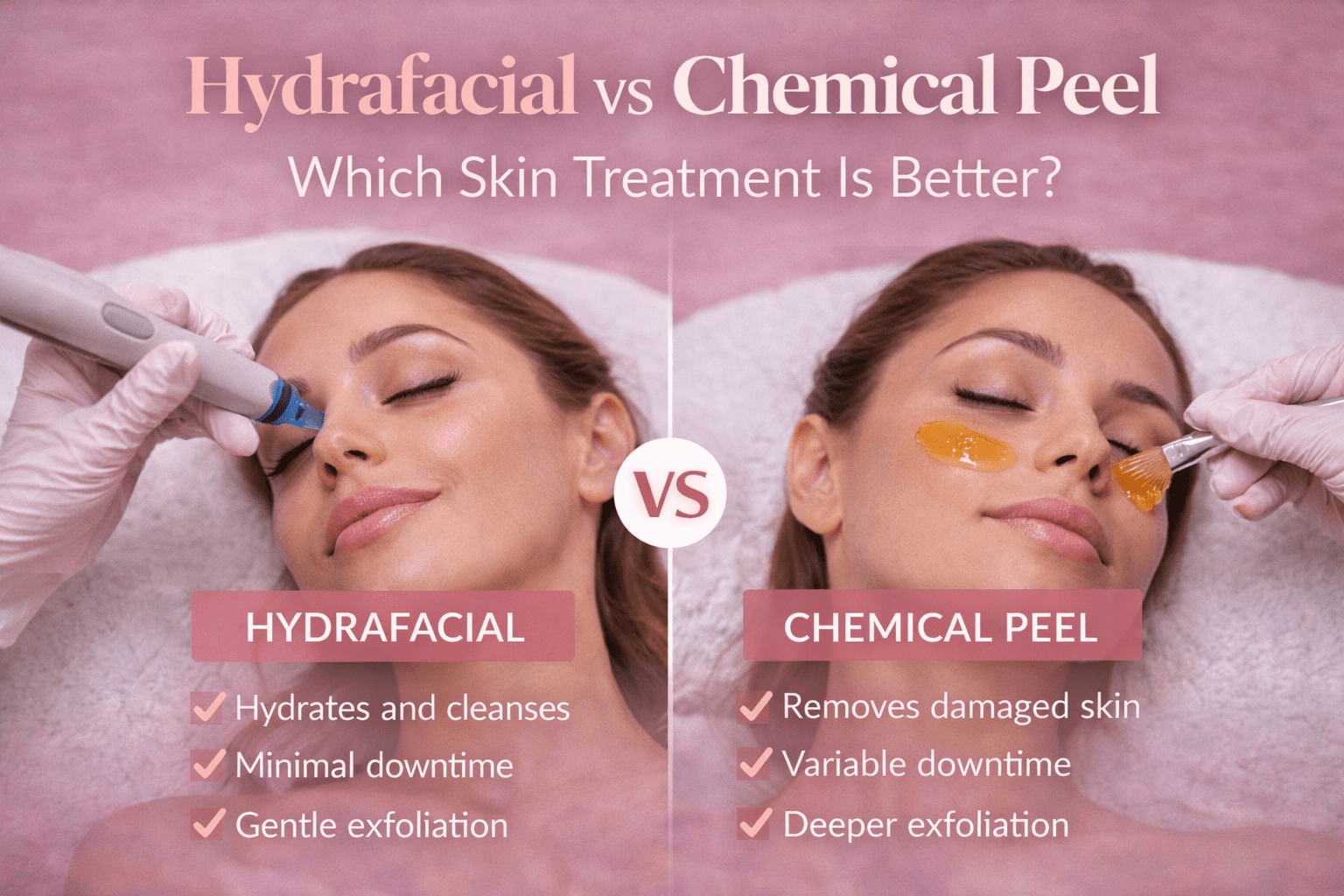
When it comes to improving skin texture, brightness, and overall complexion, two of the most commonly discussed treatments are Hydrafacial and chemical peels. Both treatments are designed to rejuvenate the skin, remove dead skin cells, and improve overall skin health. However, they work in very different ways and are suited for different skin concerns.
At Aesthetic Island, a trusted Brooklyn Med Spa, many patients ask whether a Hydrafacial or a chemical peel is the better option for their skin goals. The truth is that both treatments can be highly effective when used appropriately.
This comprehensive guide explains the key differences between Hydrafacial and chemical peel treatments, how they work, what results you can expect, and which option may be the best choice for your skin.
Table of Contents
ToggleWhat Is a Hydrafacial?
Hydrafacial treatments have become extremely popular because they provide immediate results with minimal irritation and no downtime.
The treatment typically involves three key steps:
Cleansing and exfoliation to remove dead skin cells
Extraction to clear clogged pores
Hydration infusion with nourishing serums
Because the treatment is gentle and customizable, it is suitable for most skin types.
What Is a Chemical Peel?
A chemical peel is a skin treatment that uses a chemical solution to exfoliate the outer layers of the skin. By removing damaged skin cells, chemical peels stimulate the regeneration of healthier skin underneath.
Chemical peels vary in strength and depth. Some are mild and require little downtime, while stronger peels can provide more dramatic results but may involve a longer recovery period.
Chemical peels work by accelerating the skin’s natural exfoliation process. Over time, this can improve skin tone, reduce pigmentation, and minimize fine lines.
Key Differences Between Hydrafacial and Chemical Peels
While both treatments aim to improve skin appearance, they work through different mechanisms.
Hydrafacial
• Uses a device-based system
• Focuses on hydration and gentle exfoliation
• Minimal downtime
• Suitable for frequent treatments
Chemical Peel
• Uses chemical exfoliation
• Removes deeper layers of damaged skin
• May involve visible peeling
• Often performed less frequently
Understanding these differences helps determine which treatment may be more appropriate for your skin concerns.
Skin Concerns Treated by Hydrafacial
Hydrafacial treatments are often recommended for patients who want to refresh and hydrate their skin.
Common concerns treated with Hydrafacial include:
• Dull skin
• Mild acne
• Clogged pores
• Dehydration
• Uneven skin tone
• Fine lines
Because Hydrafacial treatments are gentle, they are ideal for patients seeking regular maintenance for skin health.
Skin Concerns Treated by Chemical Peels
Chemical peels are often used to address more significant skin concerns.
These treatments may help improve:
• Hyperpigmentation
• Sun damage
• Acne scars
• Wrinkles
• Uneven skin texture
• Dark spots
Chemical peels can produce deeper exfoliation compared to Hydrafacial treatments.
Types of Chemical Peels
Chemical peels are categorized based on their strength and depth.
Superficial Peels
Superficial peels target the outermost layer of the skin. These peels typically use mild acids such as glycolic acid or lactic acid.
Benefits include:
• Brighter skin tone
• Mild exfoliation
• Minimal downtime
Medium Peels
Medium-depth peels penetrate deeper into the skin and may improve:
• Moderate wrinkles
• Pigmentation issues
• Acne scars
These peels may require several days of recovery.
Deep Peels
Deep chemical peels provide the most dramatic results but also involve longer recovery time. These are typically used for more severe skin concerns.
Benefits of Hydrafacial Treatments
Hydrafacial treatments offer several advantages for patients seeking gentle skin rejuvenation.
Immediate Results
One of the biggest benefits of Hydrafacial treatments is that patients often notice smoother and brighter skin immediately after the procedure.
No Downtime
Hydrafacial treatments do not typically cause redness or peeling, allowing patients to resume daily activities right away.
Hydration Boost
Hydrafacial treatments infuse the skin with hydrating serums that help restore moisture balance.
Suitable for Most Skin Types
Because the treatment is customizable, Hydrafacial can be adjusted for sensitive, oily, or combination skin.
Benefits of Chemical Peels
Chemical peels also offer several advantages depending on the type of peel used.
Deeper Skin Renewal
Chemical peels remove damaged skin cells and encourage new skin growth.
Improved Pigmentation
Peels can reduce the appearance of dark spots and sun damage.
Acne Treatment
Certain chemical peels help unclog pores and reduce acne breakouts.
Collagen Stimulation
By triggering skin regeneration, chemical peels can support collagen production.
Hydrafacial vs Chemical Peel for Acne
Both treatments can benefit acne-prone skin, but they work differently.
Hydrafacial for Acne
Hydrafacial treatments help remove excess oil and debris from the pores. The extraction process can reduce congestion and improve skin clarity.
Chemical Peels for Acne
Chemical peels containing salicylic acid or glycolic acid can penetrate the pores and reduce acne-causing bacteria.
Patients with severe acne may benefit from a treatment plan that includes chemical peels.
Hydrafacial vs Chemical Peel for Anti-Aging
Many patients choose these treatments to improve signs of aging.
Hydrafacial for Anti-Aging
Hydrafacial treatments can reduce the appearance of fine lines while improving hydration and skin texture.
Chemical Peels for Anti-Aging
Chemical peels can improve deeper wrinkles and pigmentation changes associated with aging.
The best option depends on the severity of aging concerns.
Downtime Comparison
Downtime is an important factor when choosing a skin treatment.
Hydrafacial Downtime
Hydrafacial treatments typically have no downtime. Patients can return to normal activities immediately.
Chemical Peel Downtime
Chemical peel recovery varies depending on the strength of the peel.
Superficial peels may cause mild redness, while stronger peels can cause several days of peeling and sensitivity.
How Often Should Treatments Be Done?
Treatment frequency depends on the type of procedure and individual skin goals.
Hydrafacial Frequency
Many patients schedule Hydrafacial treatments once a month to maintain healthy skin.
Chemical Peel Frequency
Chemical peels are usually performed every four to six weeks depending on the peel strength.
Your provider will recommend the appropriate schedule for your skin.
Cost Comparison
Treatment costs vary based on location, provider expertise, and treatment type.
Hydrafacial Cost
Hydrafacial treatments in major cities such as Brooklyn typically range from $150 to $300 per session.
Chemical Peel Cost
Chemical peel pricing varies depending on the depth of the peel and may range from $150 to $600 or more.
During a consultation, providers can recommend the most cost-effective treatment plan for your needs.
Can Hydrafacial and Chemical Peels Be Combined?
Yes, many patients benefit from a treatment plan that includes both procedures.
For example:
• Hydrafacial treatments may be used for regular maintenance
• Chemical peels may be used periodically for deeper skin renewal
Combining treatments can help address multiple skin concerns simultaneously.
What to Expect During a Consultation
At Aesthetic Island, the consultation process helps determine which treatment is best for your skin.
During the consultation, providers evaluate:
• Skin type
• Current skin concerns
• Sensitivity levels
• Desired results
Based on this evaluation, a personalized treatment plan is created.
Who Should Avoid These Treatments?
While both Hydrafacial and chemical peel treatments are generally safe, some individuals may need to avoid certain procedures.
Possible contraindications include:
• Active skin infections
• Severe rosacea
• Certain medications that increase skin sensitivity
A professional evaluation ensures that treatments are safe and appropriate.
Choosing the Right Treatment for Your Skin
Selecting between Hydrafacial and chemical peel treatments depends on your individual skin concerns and goals.
Choose Hydrafacial if you want:
• Gentle exfoliation
• Hydrated and glowing skin
• Minimal downtime
• Regular skin maintenance
Choose a chemical peel if you want:
• Deeper exfoliation
• Treatment for pigmentation or acne scars
• More dramatic skin renewal
A consultation with a qualified provider can help determine the best option.
Final Thoughts
Both Hydrafacial and chemical peel treatments are effective ways to improve skin health and appearance. Hydrafacial treatments provide gentle cleansing and hydration, making them ideal for maintaining radiant skin. Chemical peels offer deeper exfoliation and can address more significant skin concerns such as pigmentation and acne scars.
At Aesthetic Island, a premier Brooklyn Med Spa, treatment plans are customized to each patient’s unique skin needs. By combining advanced technology with expert care, patients can achieve smoother, healthier, and more youthful-looking skin.
If you are considering Hydrafacial or chemical peel treatments, schedule your Appointment today and take the first step toward a more confident you.
