
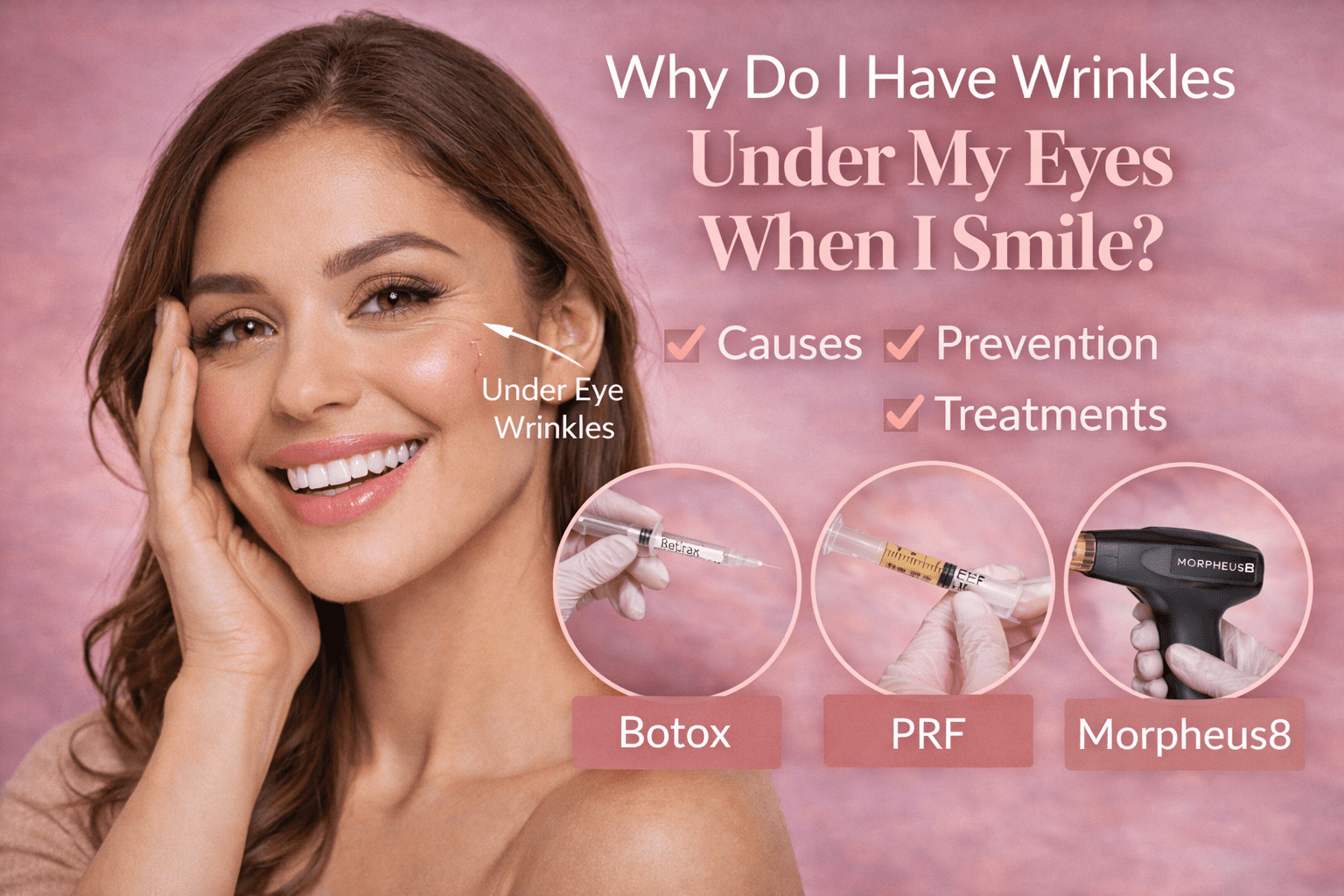
Wrinkles under the eyes when smiling are one of the most common cosmetic concerns patients ask about at Aesthetic Island, a leading Brooklyn Med Spa. Many people notice that when they smile or laugh, fine lines suddenly appear under the eyes. While these lines can be completely normal, they may also become deeper over time due to aging and changes in skin quality.
If you’ve looked in the mirror after smiling and wondered why your under-eye area wrinkles so easily, you’re not alone. Understanding what causes these wrinkles and how to treat them can help you maintain smoother, healthier skin.
This comprehensive guide explains why wrinkles appear under the eyes when smiling, how aging contributes to these changes, and the most effective treatments available today.
Table of Contents
ToggleWhy Wrinkles Appear Under Your Eyes When You Smile
Wrinkles under the eyes when smiling occur because of a combination of facial muscle movement and delicate skin in the under-eye area.
When you smile, the muscles around the eyes contract. This movement causes the skin to fold slightly. For younger individuals with strong collagen levels, the skin typically bounces back quickly. However, as collagen declines and skin becomes thinner, those folds become more visible.
These wrinkles are often referred to as dynamic wrinkles, meaning they appear primarily during facial expressions.
The Role of the Orbicularis Oculi Muscle
The muscle responsible for eye movement during smiling is called the orbicularis oculi. This circular muscle surrounds the eye and contracts whenever you smile, squint, or laugh.
When this muscle contracts:
• The cheeks lift
• The eyes narrow slightly
• The skin beneath the eyes folds naturally
Over time, repeated muscle movement can lead to permanent lines in the skin.
Why the Under-Eye Area Is More Prone to Wrinkles
The skin beneath the eyes is significantly thinner than skin on other parts of the face. This makes it more vulnerable to wrinkles and creasing.
Several factors make the under-eye area especially delicate:
• Thinner skin structure
• Fewer oil glands
• Constant muscle movement
• Exposure to environmental stress
Because of these factors, wrinkles often appear here before they appear elsewhere on the face.
Age and Collagen Loss
One of the biggest contributors to under-eye wrinkles is collagen loss. Collagen is the protein responsible for keeping skin firm and smooth.
Starting in your mid-20s, collagen production gradually declines. This decline becomes more noticeable in the 30s and 40s.
As collagen decreases:
• Skin becomes thinner
• Elasticity decreases
• Wrinkles become more visible
This is why wrinkles under the eyes tend to become more pronounced with age.
Other Factors That Cause Under-Eye Wrinkles
Several additional factors can contribute to wrinkles under the eyes when smiling.
Sun Exposure
Ultraviolet radiation breaks down collagen and accelerates skin aging. People who spend significant time in the sun without protection often develop wrinkles earlier.
Dehydrated Skin
When skin lacks hydration, fine lines become more noticeable. The under-eye area is particularly sensitive to dryness.
Genetics
Some individuals naturally have thinner skin or stronger facial muscles around the eyes. Genetics can influence how early wrinkles develop.
Repeated Facial Expressions
Smiling, squinting, and laughing are natural facial movements. Over time, these repeated expressions create lines in the skin.
Lifestyle Factors
Smoking, poor sleep, and high stress levels can also contribute to premature skin aging.
Are Wrinkles When Smiling Normal?
Yes. In fact, wrinkles under the eyes when smiling are completely normal and often a sign of natural facial expression.
Many people notice these lines beginning in their late 20s or early 30s. For some individuals, they appear earlier depending on genetics and lifestyle factors.
The key difference between normal lines and aging-related wrinkles is whether the lines disappear when your face relaxes. If the lines remain visible even when you are not smiling, they are considered static wrinkles.
Types of Under-Eye Wrinkles
Understanding the different types of wrinkles can help determine the best treatment.
Dynamic Wrinkles
Dynamic wrinkles appear during facial movement, such as smiling or squinting. These wrinkles are caused primarily by muscle activity.
Static Wrinkles
Static wrinkles are visible even when your face is at rest. These develop when collagen loss and repeated expressions cause permanent changes in the skin.
Crepey Skin
Crepey skin refers to thin, delicate skin that appears wrinkled even without movement. This is often related to dehydration or collagen loss.
Can You Prevent Wrinkles Under Your Eyes?
While wrinkles are a natural part of aging, certain habits can slow their development.
Wear Sunscreen Daily
Sun protection is one of the most effective ways to prevent premature skin aging.
Maintain Proper Hydration
Hydrated skin is more resilient and less prone to fine lines.
Use Quality Skincare Products
Ingredients such as retinol, peptides, and antioxidants support skin health.
Get Adequate Sleep
Sleep allows the body to repair skin and maintain collagen production.
Avoid Excessive Squinting
Wearing sunglasses outdoors can reduce repetitive squinting that contributes to wrinkles.
Best Treatments for Wrinkles Under Eyes When Smiling
For individuals who want to reduce the appearance of these wrinkles, several effective treatments are available.
At Aesthetic Island, treatments are customized to each patient’s skin condition and goals.
Botox for Under-Eye Wrinkles
One of the most popular treatments for dynamic wrinkles around the eyes is Botox.
Botox works by relaxing the muscles responsible for facial expressions. When injected carefully around the eye area, Botox can soften the appearance of wrinkles that appear during smiling.
Benefits include:
• Smoother skin
• Reduced wrinkle depth
• Prevention of deeper lines
Results typically last three to four months.
PRF for Under-Eye Skin Quality
PRF (Platelet-Rich Fibrin) is a regenerative treatment that uses the patient’s own blood to stimulate collagen production.
PRF is particularly effective for improving:
• Thin under-eye skin
• Dark circles
• Fine lines
Because PRF supports natural skin regeneration, results develop gradually over several weeks.
Dermal Fillers for Under-Eye Hollowing
Some wrinkles under the eyes are caused by volume loss rather than muscle movement.
In these cases, dermal fillers may be recommended to restore support beneath the skin.
Fillers can:
• Smooth under-eye hollows
• Improve skin texture
• Reduce the appearance of wrinkles
Results can last up to one year depending on the product used.
Morpheus8 Skin Tightening
Morpheus8 is a treatment that combines microneedling with radiofrequency energy to stimulate deep collagen production.
This treatment can improve:
• Skin firmness
• Fine lines
• Texture irregularities
Over time, Morpheus8 encourages the skin to rebuild collagen and elasticity.
Hydrafacial for Skin Hydration
While Hydrafacial does not directly treat wrinkles, it helps improve skin hydration and overall texture.
Hydrated skin reflects light better and often appears smoother.
Many patients use Hydrafacial treatments regularly to maintain skin health.
Combination Treatments for Best Results
Often, the best results come from combining multiple treatments.
For example:
• Botox may reduce muscle movement
• PRF may improve skin quality
• Fillers may restore lost volume
Together, these treatments address multiple causes of under-eye wrinkles simultaneously.
When Should You Consider Treatment?
Many patients consider treatment when they notice:
• Wrinkles becoming deeper over time
• Lines appearing even when not smiling
• Makeup settling into under-eye lines
• Under-eye skin looking thin or crepey
A consultation with a qualified provider can help determine the most effective treatment approach.
What to Expect During a Consultation
At Aesthetic Island, consultations focus on understanding each patient’s concerns and facial anatomy.
During the consultation, providers evaluate:
• Skin thickness
• Wrinkle patterns
• Facial movement
• Volume loss
Based on this evaluation, a personalized treatment plan is created.
Are Under-Eye Treatments Safe?
When performed by experienced professionals, under-eye treatments are generally safe and effective.
Temporary side effects may include:
• Mild swelling
• Redness
• Minor bruising
These effects usually resolve quickly and rarely interfere with daily activities.
Maintaining Healthy Skin Long-Term
Treatments can significantly improve the appearance of wrinkles, but maintaining results requires ongoing care.
Healthy skin habits include:
• Daily sunscreen use
• Proper hydration
• Consistent skincare routines
• Periodic maintenance treatments
Maintaining skin health helps preserve treatment results and slow the aging process.
Embracing Natural Expression
It’s important to remember that wrinkles when smiling are also a natural sign of facial expression and emotion. Many people choose to soften these lines rather than eliminate them entirely.
Modern aesthetic treatments focus on creating natural-looking results that enhance your features while maintaining your unique expressions.
Final Thoughts
Wrinkles under the eyes when smiling are a natural part of facial movement, but they can become more noticeable as collagen levels decline and skin becomes thinner.
Understanding the causes of these wrinkles can help you choose the most effective treatment options. Modern aesthetic medicine offers several solutions, including Botox, PRF, dermal fillers, and collagen-stimulating treatments.
At Aesthetic Island, a trusted Brooklyn Med Spa, personalized treatment plans help patients achieve smoother, healthier skin while maintaining natural facial expression.
If you are concerned about wrinkles under your eyes when smiling, scheduling a consultation is the best way to explore treatment options and develop a plan that works for your skin and goals.
schedule your Appointment today and take the first step toward a more confident you.

