
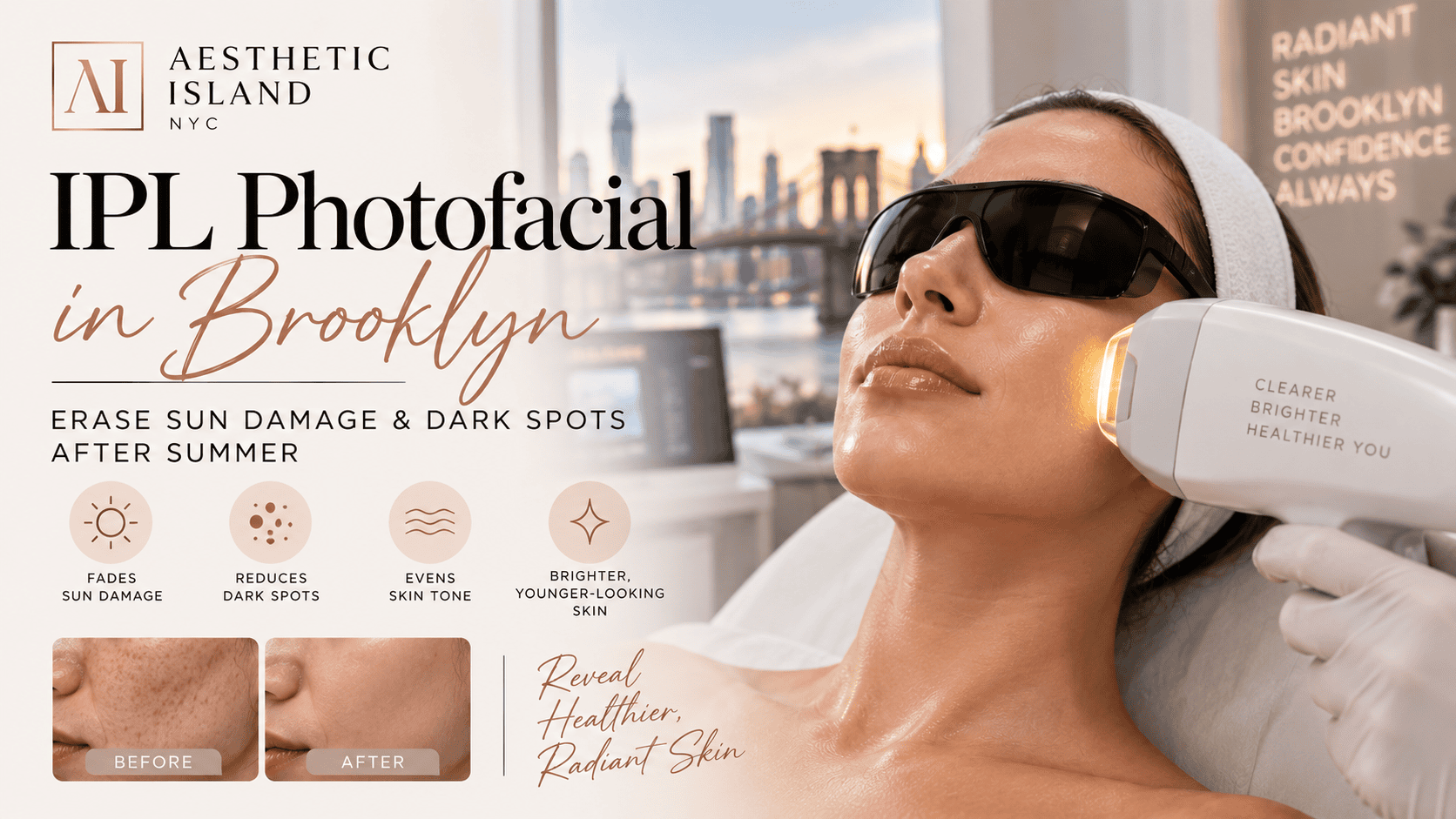
Summer in New York is wonderful — rooftop evenings, beach days at Brighton, long walks through the neighborhood. But when the season ends, your skin often tells the story: sun spots, brown patches, freckling, and uneven tone that seemed to appear out of nowhere. If that sounds familiar, an IPL photofacial in Brooklyn may be exactly what your skin needs. It’s one of the most effective non-invasive ways to erase the sun damage and dark spots that summer leaves behind — and fall is the perfect time to do it.
In this guide, we’ll explain what an IPL photofacial is, how it works, what it treats, what results and downtime to expect, how much it costs in Brooklyn, and why the post-summer season is the ideal window to book. By the end, you’ll know whether an IPL photofacial is the right way to reset your complexion for the year ahead.
Table of Contents
ToggleWhat Is an IPL Photofacial?
An IPL photofacial is a non-invasive skin treatment that uses intense pulsed light (that’s what “IPL” stands for) to improve the tone, clarity, and evenness of your skin. It’s often called a “photofacial” because it uses light to rejuvenate the face — though it can also be used on the neck, chest, hands, and other areas.
Here’s an important distinction: IPL is not a laser. A laser uses a single, focused wavelength of light, while IPL uses a broad spectrum of light across many wavelengths. That broad range is actually IPL’s superpower, because it lets a single treatment address several concerns at once — brown spots, redness, and overall dullness — rather than just one.
In short, an IPL photofacial is a versatile, gentle way to undo visible signs of sun damage and aging and reveal clearer, brighter, more even-toned skin — with little to no downtime.
How Does an IPL Photofacial Work?
The science behind an IPL photofacial is elegantly simple. The device delivers pulses of broadband light into the skin, where the energy is absorbed by pigment (melanin) and by the blood vessels (hemoglobin) responsible for redness.
When the light targets a sun spot or brown patch, it heats and breaks up the excess pigment. Over the following days, that pigment rises to the surface, darkens, and then flakes away — taking the dark spot with it and revealing clearer skin underneath. When the light targets redness or broken capillaries, it collapses those tiny vessels so your body can clear them, reducing flushing and rosacea-related redness.
There’s a bonus, too. The gentle heat of an IPL photofacial also stimulates a modest amount of collagen production over time, which can subtly improve skin texture and firmness. So while IPL is best known for erasing sun damage and dark spots, it delivers overall rejuvenation as well.
What an IPL Photofacial Treats
One of the biggest advantages of an IPL photofacial is its versatility. A single treatment can address a wide range of concerns, which is exactly why it’s such a popular post-summer reset. IPL is commonly used to treat:
- Sun spots and age spots — the flat brown spots that accumulate from years of sun exposure
- Hyperpigmentation and uneven tone — patches of darker pigment and general unevenness
- Freckling from sun exposure
- Redness and rosacea — persistent flushing and diffuse redness
- Broken capillaries and small visible blood vessels
- Dull, tired-looking skin that needs brightening
- Overall sun damage accumulated over the summer and over the years
Because sun damage and pigment issues are among the most common skin complaints — and among the hardest to fix with skincare alone — an IPL photofacial in Brooklyn has become a go-to solution for restoring a clear, even complexion. According to dermatology experts, cumulative sun exposure is the leading cause of premature skin aging and pigmentation, which is why treatments that target that damage directly are so valuable. (For more on sun damage and pigmentation, the American Academy of Dermatology is an excellent resource.)
Why Fall Is the Perfect Time for an IPL Photofacial in Brooklyn
Timing matters a great deal with light-based treatments, and fall is the ideal season to book an IPL photofacial in Brooklyn. There are three big reasons.
First, IPL treats the exact damage summer creates. After months of sun, the spots and unevenness that IPL targets are at their most visible. Fall is when you finally see the full picture — and when you can do something about it.
Second, IPL makes your skin more sensitive to the sun. After treatment, your skin needs protection from UV exposure to heal properly and to prevent new pigment from forming. Fall’s shorter days and weaker sun make that far easier than the height of summer.
Third, less sun means safer, better results. Treating skin during a low-sun season reduces the risk of complications like new hyperpigmentation and gives your complexion the calm environment it needs to heal beautifully.
This is exactly why estheticians call autumn “laser season,” and IPL is a cornerstone of it. If you want to understand the broader seasonal strategy, our guide on why fall is the best time for laser treatments in Brooklyn covers it in depth. The takeaway is simple: to erase summer’s sun damage safely and effectively, fall is your window.
The Benefits of an IPL Photofacial
Why do so many Brooklyn patients choose an IPL photofacial over other options? The benefits add up quickly:
- It treats multiple concerns at once — spots, redness, and dullness in a single session
- Little to no downtime — most people return to normal activities right away
- Quick treatments — sessions are typically short and fit into a lunch break
- Natural, gradual brightening — clearer, more even skin without looking “done”
- A collagen bonus — subtle improvements in texture and firmness over time
- Versatile placement — face, neck, chest, and hands can all be treated
- Great for maintenance — easy to repeat periodically to keep skin clear
For anyone who wants a clearer, brighter complexion without surgery or significant recovery, an IPL photofacial offers an outstanding balance of results and convenience.
What to Expect During an IPL Photofacial in Brooklyn
Wondering what the experience is actually like? Here’s a step-by-step look at an IPL photofacial in Brooklyn from start to finish.
The consultation. First, your provider examines your skin, discusses your concerns and goals, and confirms you’re a good candidate. This step matters, because IPL settings must be tailored to your skin — which is why an experienced provider is essential.
Preparation. On treatment day, your skin is cleansed, and a cooling gel is often applied. You’ll wear protective eyewear to shield your eyes from the light.
The treatment. The provider glides the IPL device across the target areas, delivering pulses of light. Most people describe the sensation as a light “rubber band snap” against the skin, followed by warmth. It’s generally well tolerated, and treatments are quick — often 20 to 30 minutes depending on the area.
Right after. Your skin may look slightly flushed or feel warm, similar to a mild sunburn, which typically fades within a few hours to a day.
Because there’s minimal downtime, an IPL photofacial is easy to fit into a busy Brooklyn schedule — one reason it’s such a popular treatment.
IPL Photofacial Before and After: Results and Timeline
Understanding the results timeline helps you know exactly what to expect after your IPL photofacial.
Days 1 to 3: Treated brown spots often darken — this is a normal and expected sign the treatment is working. The pigment is rising to the surface.
Days 3 to 7: Those darkened spots begin to flake and slough off naturally, like fine coffee grounds. It’s important not to pick at them; let them shed on their own.
Weeks 1 to 2: As the spots clear, your skin looks noticeably brighter, clearer, and more even. Redness also begins to diminish.
Ongoing: Because IPL also stimulates collagen, skin texture can continue to improve gradually. Many people do a short series of treatments — often three or so, spaced a few weeks apart — for the most complete results, followed by occasional maintenance sessions to keep the complexion clear.
Results vary from person to person based on the severity of the sun damage, your skin type, and your treatment plan. But for most patients, the payoff is a fresher, more even complexion that looks like a genuine reset after summer.
IPL Photofacial Downtime and Aftercare
One of the best things about an IPL photofacial is how little downtime it requires. Most people return to work and normal activities immediately, and any redness usually fades quickly. That said, proper aftercare protects your results and your skin.
- Wear SPF every day, without exception. This is the single most important step. Sun exposure after IPL can undo your results and trigger new pigment. Daily broad-spectrum sunscreen is essential — even in fall and winter, and even on cloudy days.
- Don’t pick at flaking spots. Let the darkened pigment shed naturally to avoid irritation or scarring.
- Be gentle. Use mild, hydrating skincare for a few days, and avoid harsh exfoliants or active ingredients unless your provider approves.
- Avoid heat. Skip saunas, hot yoga, and intense workouts for a day or two, since heat can aggravate freshly treated skin.
- Follow your provider’s plan. Personalized instructions always come first.
Following these simple steps ensures your skin heals cleanly and your bright, even results last.
How Much Does an IPL Photofacial Cost in Brooklyn?
Cost is one of the most common questions, so let’s address it directly. In the Brooklyn and NYC market, a single IPL photofacial typically ranges from around $350 to $600 per session, depending on the treatment area, the provider’s expertise, and whether you’re treating the face alone or adding areas like the neck and chest.
A few things to keep in mind:
- Many patients do a series. Because a package of three or so sessions often delivers the most complete results, ask about package pricing, which usually offers better per-session value.
- Maintenance matters. Periodic touch-up sessions help keep your complexion clear over time, so factor that into your long-term budget.
- Don’t shop on price alone. IPL settings must be matched carefully to your skin, and an experienced provider protects both your safety and your results. A bargain treatment by an inexperienced hand can lead to burns or pigment problems.
At your consultation, your provider will give you an exact, personalized quote based on your skin and goals.
IPL Photofacial vs. Other Treatments
How does an IPL photofacial compare to other skin treatments? Here’s a quick guide to help you understand where it fits.
IPL vs. CO2 laser resurfacing. IPL targets surface pigment and redness with minimal downtime, while CO2 laser resurfacing works deeper to address wrinkles, scars, and texture — with more downtime. If your main concern is sun spots and tone, IPL is often the better fit; if it’s deep texture and lines, CO2 may be. Our complete guide to CO2 laser resurfacing explains the difference.
IPL vs. a HydraFacial or chemical peel. A HydraFacial cleanses, exfoliates, and hydrates for an immediate glow, and a chemical peel exfoliates the surface, while IPL specifically targets pigment and redness beneath the surface. They’re complementary — many people pair them. See our comparison of HydraFacial vs. chemical peel for more.
IPL vs. Morpheus8. Morpheus8 uses radiofrequency microneedling to tighten and improve texture, while IPL addresses tone and pigment. Again, different jobs — and often used together in a full skin-rejuvenation plan.
The bottom line: an IPL photofacial is the go-to when your primary concern is sun damage, brown spots, redness, and uneven tone.
Who Is a Good Candidate for an IPL Photofacial?
An IPL photofacial is a great option for many people, but not everyone. It works best for those with concerns like sun spots, freckling, redness, and uneven tone who want clearer skin with minimal downtime.
One honest and important note: IPL is traditionally most effective and safest on lighter-to-medium skin tones, because it targets pigment by contrast. On deeper skin tones, IPL carries a higher risk of unwanted pigment changes, so it may not be the right choice — and an ethical provider will recommend a safer alternative if that’s the case. This is exactly why a professional consultation is essential. A qualified, experienced provider will assess your skin honestly and recommend IPL only if it’s truly right for you, or guide you to a better-suited treatment if it isn’t.
Why Choose Aesthetic Island for Your IPL Photofacial in Brooklyn
When it comes to light-based treatments, the provider makes all the difference. At Aesthetic Island in Brooklyn, your IPL photofacial is performed by experienced professionals under the direction of our lead aesthetic provider, Eva Israilova, NP — in a practice featured in USA Today, OK! Magazine, Haute Living, and Haute Beauty.
We take the time to assess your skin properly, customize your treatment settings for safe and effective results, and build a plan around your specific concerns and goals. Whether you’re erasing a summer’s worth of sun damage or maintaining a clear, even complexion year-round, we’ll help you get there.
Fall is the perfect time to reset your skin. Book your IPL photofacial consultation today or call (917) 809-0570 to erase summer’s sun damage before the new year.
Frequently Asked Questions
What does an IPL photofacial treat?
An IPL photofacial treats sun spots, age spots, hyperpigmentation, freckling, redness, rosacea, broken capillaries, and overall uneven tone and dullness. It’s especially popular for erasing sun damage after summer.
Is an IPL photofacial painful?
Most people find it very tolerable, describing the sensation as a light rubber-band snap followed by warmth. Treatments are quick, and no numbing is typically required.
How many IPL photofacial sessions do I need?
Many patients get the best results from a short series — often around three sessions spaced a few weeks apart — followed by occasional maintenance treatments to keep the skin clear.
How much does an IPL photofacial cost in Brooklyn?
A single session typically ranges from about $350 to $600, depending on the area treated and the provider. Packages of multiple sessions usually offer better per-session value. Your exact price is confirmed at consultation.
Is there any downtime after an IPL photofacial?
Downtime is minimal. You may have mild redness or warmth for a few hours, and treated brown spots will darken and flake off over about a week. Most people return to normal activities right away.
Why is fall the best time for an IPL photofacial?
IPL makes skin more sun-sensitive and specifically targets summer’s sun damage, so fall’s low-sun season allows for safer healing, better results, and a lower risk of new pigmentation.
Is an IPL photofacial safe for all skin tones?
IPL is safest and most effective on lighter-to-medium skin tones. On deeper skin tones it carries more risk, so a consultation is essential to determine whether IPL — or a safer alternative — is right for you.

